
4
Wait for a weary enemy in peace.
Interpretation:
Staying quiet and waiting,
when the enemy gets tired.
Open confrontation
Binds the enemy's forces.
“The one who waits for the enemy and enters the battlefield first is full of strength, but the one who comes late and enters the battle is already tired. The winner is the one who knows how to control the enemy and does not allow him to control himself.”
(Sun Tzu)
The trick is to put your opponent at a disadvantage. This applies not only in military operations, but also in everyday life. You need to react to the enemy's maneuvers and remain motionless to keep the enemy moving. The point is to be the fulcrum that controls the course of events.
when the enemy gets tired.
Open confrontation
Binds the enemy's forces.
“The one who waits for the enemy and enters the battlefield first is full of strength, but the one who comes late and enters the battle is already tired. The winner is the one who knows how to control the enemy and does not allow him to control himself.”
(Sun Tzu)
The trick is to put your opponent at a disadvantage. This applies not only in military operations, but also in everyday life. You need to react to the enemy's maneuvers and remain motionless to keep the enemy moving. The point is to be the fulcrum that controls the course of events.
Historical example:
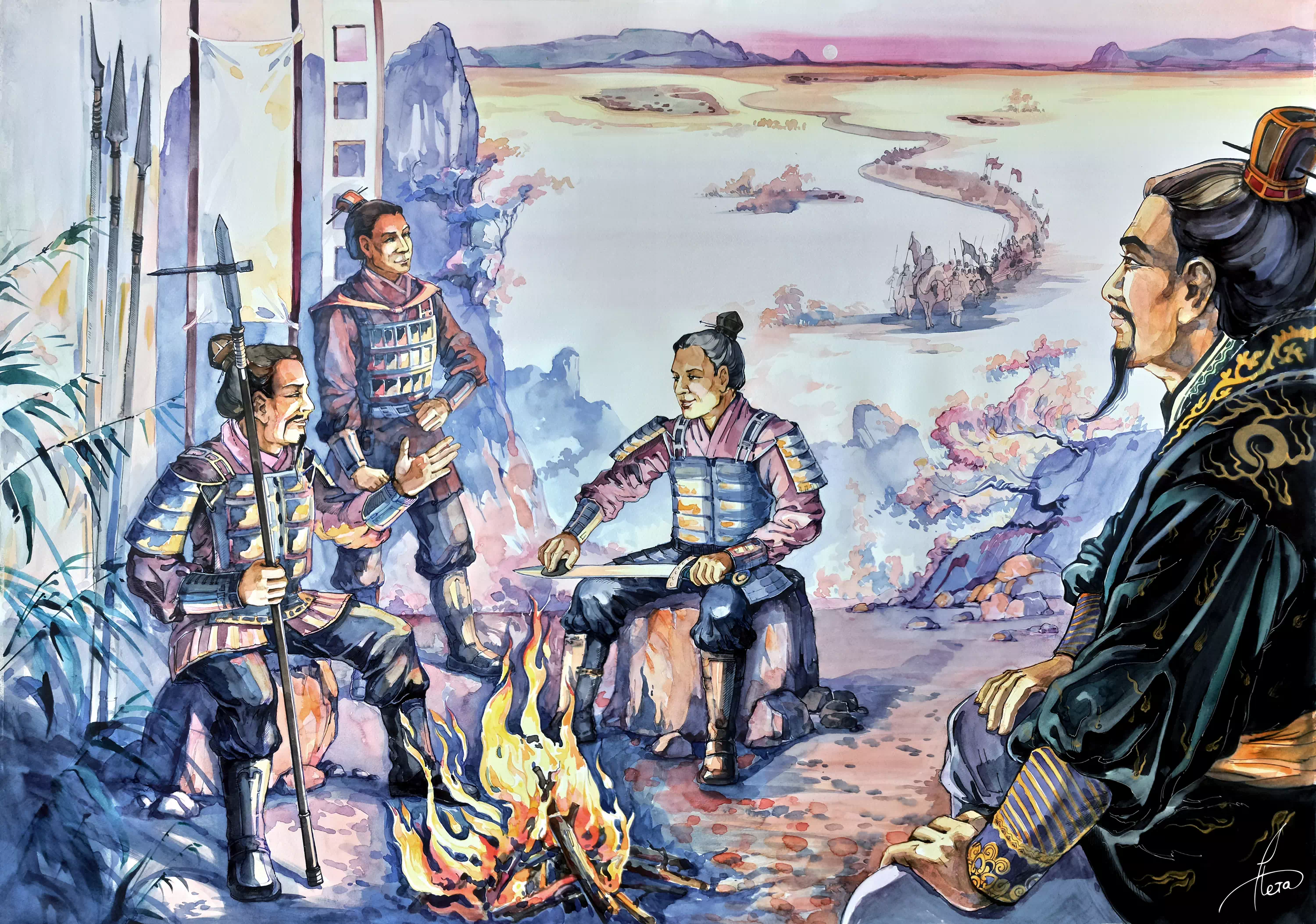
The Han kingdom asked the ruler of the Qi kingdom for help when they were attacked by the hostile state of Wei. Then Sun Bin, the commander of the Qis army, immediately led his troops to the capital of the Wei kingdom in order to divert attention from the Han kingdom.
The enemy found out about this and immediately led their warriors back to Wei to save their lands. When the Wei army came close to the Qi army, Sun Bin first pretended to retreat. On the first day, his army left behind one hundred thousand fire pits, on the second - fifty thousand, and on the third - only thirty thousand. So Sun Bin created the illusion that his army was shrinking.
The commander of the Wei army decided that mass desertion had begun in Sun Bin's army, and left the heavily armed cavalry to rest, moving only the infantry forward. In one day, his warriors made two day marches, trying to catch up with Sun Bin's army. They wanted to get into battle as quickly as possible. Sun Bin estimated that the Wei army would reach Maling Town the next day. There he set up an ambush, prepared a plan, and placed his soldiers in advantageous positions. In a short battle, Sun Bin easily defeated the Wei army.
This example is excellent historical evidence of how the use of retreat and ambush tactics can lead to victory in battle, despite the relative weakness of the army.
The enemy found out about this and immediately led their warriors back to Wei to save their lands. When the Wei army came close to the Qi army, Sun Bin first pretended to retreat. On the first day, his army left behind one hundred thousand fire pits, on the second - fifty thousand, and on the third - only thirty thousand. So Sun Bin created the illusion that his army was shrinking.
The commander of the Wei army decided that mass desertion had begun in Sun Bin's army, and left the heavily armed cavalry to rest, moving only the infantry forward. In one day, his warriors made two day marches, trying to catch up with Sun Bin's army. They wanted to get into battle as quickly as possible. Sun Bin estimated that the Wei army would reach Maling Town the next day. There he set up an ambush, prepared a plan, and placed his soldiers in advantageous positions. In a short battle, Sun Bin easily defeated the Wei army.
This example is excellent historical evidence of how the use of retreat and ambush tactics can lead to victory in battle, despite the relative weakness of the army.