
6
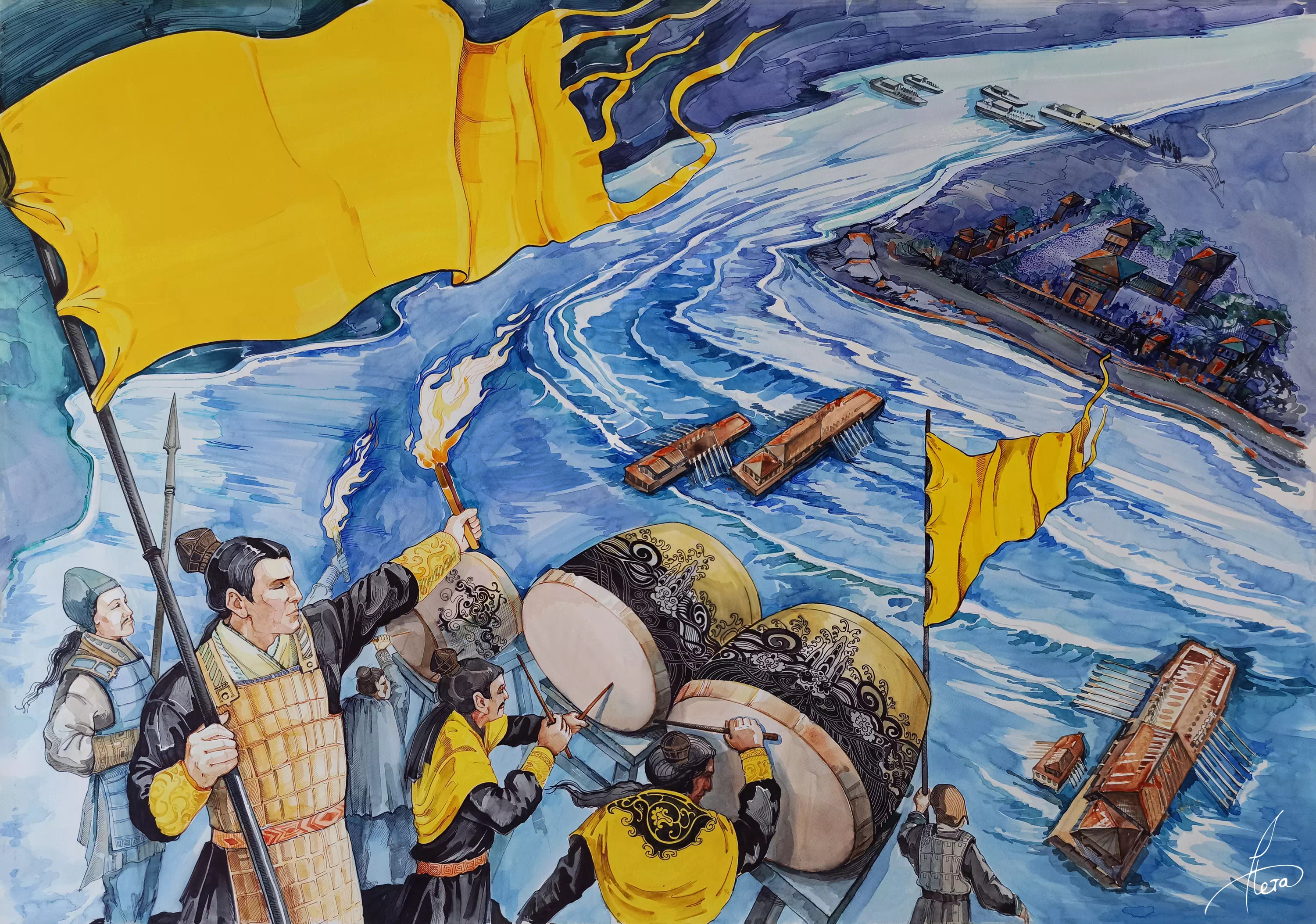
In the east to make noise - in the west to attack.
Interpretation:
The spirit of the enemy and his troops
were confused.
This is an opportune moment
for a surprise attack.
If you want to overcome the worrying elements, keep your weapon ready.
were confused.
This is an opportune moment
for a surprise attack.
If you want to overcome the worrying elements, keep your weapon ready.
Historical example:
After the establishment of the imperial Han dynasty, King Bao refused to surrender to the new emperor and instructed his general Bo Zhi to dig in with his army on the eastern bank of the Yellow River. Bo Zhi blocked the river crossing, destroyed all the boats of local peasants and placed a mobile detachment to patrol the shore. Then he calmed down, confident that the enemy army had no other means of crossing.
Han Xin, the commander-in-chief of the Han army, realized that a direct attack on the enemy would not bring success. However, he set up his main camp at this place, placed many banners around the camp and gathered all the ships that he had to this place. He then ordered his soldiers to light bonfires and noisily celebrate their victories with drums. Thus, he created the illusion of preparing for an offensive, which forced Bo Zhi to focus on defending the eastern bank.
For days on end, the Han troops beat drums and made noise, giving the impression that they were preparing to cross the river. Bo Zhi, confident that he had destroyed all the crossings, weakened control over the river. At this time, Han Xin secretly led his main forces north, where he crossed the Yellow River at another bottleneck. He then quickly headed south, where Bo Zhi was, and struck him in an unexpected direction. This decided the outcome of the battle: the Wei army was completely defeated, and Han Xin became a legend in Chinese history.
Han Xin, the commander-in-chief of the Han army, realized that a direct attack on the enemy would not bring success. However, he set up his main camp at this place, placed many banners around the camp and gathered all the ships that he had to this place. He then ordered his soldiers to light bonfires and noisily celebrate their victories with drums. Thus, he created the illusion of preparing for an offensive, which forced Bo Zhi to focus on defending the eastern bank.
For days on end, the Han troops beat drums and made noise, giving the impression that they were preparing to cross the river. Bo Zhi, confident that he had destroyed all the crossings, weakened control over the river. At this time, Han Xin secretly led his main forces north, where he crossed the Yellow River at another bottleneck. He then quickly headed south, where Bo Zhi was, and struck him in an unexpected direction. This decided the outcome of the battle: the Wei army was completely defeated, and Han Xin became a legend in Chinese history.