36
Escape.
Interpretation:
If you are weak, save your strength,
Fleeing from a disastrous battle.
If the enemy's victory is inevitable, then you can surrender, negotiate peace, or flee. Surrender means complete defeat, peace negotiations mean partial defeat. Only flight helps to avoid failure in order to be able to win in the future.
To take, you must first give.
Another way to use a stratagem is to change the topic of conversation to a safe field.
“It often happens that when you give away territory, you actually keep it for yourself.”
(Mao Zedong)
Fleeing from a disastrous battle.
If the enemy's victory is inevitable, then you can surrender, negotiate peace, or flee. Surrender means complete defeat, peace negotiations mean partial defeat. Only flight helps to avoid failure in order to be able to win in the future.
To take, you must first give.
Another way to use a stratagem is to change the topic of conversation to a safe field.
“It often happens that when you give away territory, you actually keep it for yourself.”
(Mao Zedong)
Historical example:
During the Song Dynasty, general Bi Zaiyu found himself at a disadvantage during a battle with the army of the Jin Kingdom. However, he did not want to give up. To save himself, he was forced to flee.
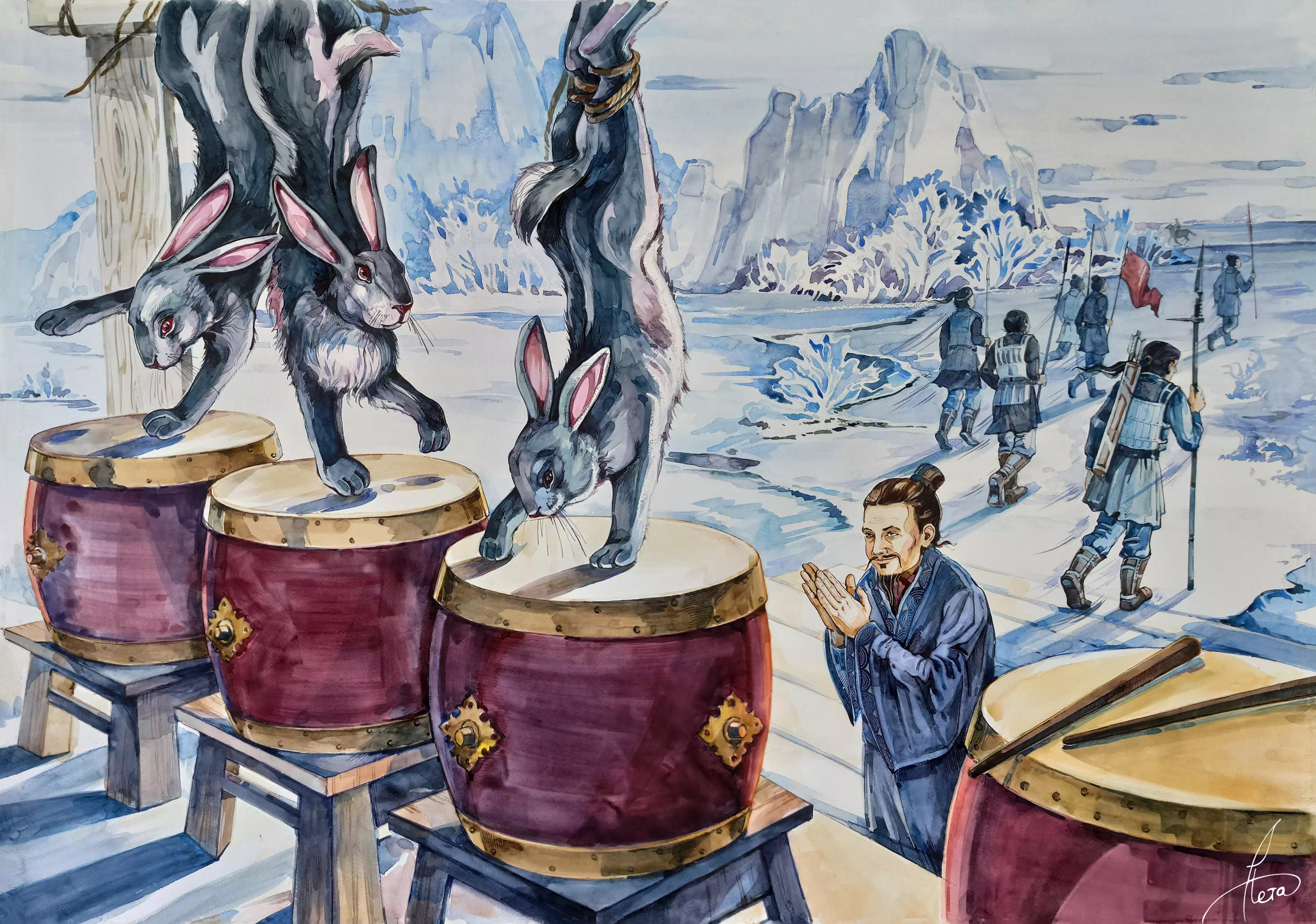
Bi Zaiyu came up with a way to confuse his pursuers. He ordered that battle banners be left on the walls of the camp so that the enemy could see them from afar. He also ordered the fastest warriors to catch hares and tie them upside down to the war drums. The warriors placed the hares so that their free front paws touched the drums. The hares tried to free themselves and created a drumbeat with their paws, like drummers preparing for battle. Then Bi Zaiyu's army quickly left their camp.
The bound hares wanted to free themselves as soon as possible. They impatiently beat the drums with their paws, making a terrible noise from morning to evening. The sound of drums and bright banners on the tower gave the impression that the Song army was ready for battle. The Jin warriors thought that Bi Zaiyu's squad was still in the camp and was preparing a trap for them. For three days they did not dare enter the camp. This allowed Bi Zaiyu's squad to escape to safety.
When the Jin warriors finally decided to attack, they saw an empty camp with war drums in the center. Bi Zaiyu deceived his opponents. He gave his warriors a break and was able to prepare for a new attack.
Bi Zaiyu came up with a way to confuse his pursuers. He ordered that battle banners be left on the walls of the camp so that the enemy could see them from afar. He also ordered the fastest warriors to catch hares and tie them upside down to the war drums. The warriors placed the hares so that their free front paws touched the drums. The hares tried to free themselves and created a drumbeat with their paws, like drummers preparing for battle. Then Bi Zaiyu's army quickly left their camp.
The bound hares wanted to free themselves as soon as possible. They impatiently beat the drums with their paws, making a terrible noise from morning to evening. The sound of drums and bright banners on the tower gave the impression that the Song army was ready for battle. The Jin warriors thought that Bi Zaiyu's squad was still in the camp and was preparing a trap for them. For three days they did not dare enter the camp. This allowed Bi Zaiyu's squad to escape to safety.
When the Jin warriors finally decided to attack, they saw an empty camp with war drums in the center. Bi Zaiyu deceived his opponents. He gave his warriors a break and was able to prepare for a new attack.